The WHUS Archive:
100 Years and Counting
Role: Designer, Writer, Producer, and Researcher
Synopsis
The WHUS Archive is a digital archive celebrating the 100-year anniversary of radio broadcasting at UConn. From WCAC to WABL and finally WHUS, this website surveys community members and radio DJs to build out a timeline of the rise and transformation of WHUS and college radio at the University of Connecticut.
Why?
Throughout my college life, WHUS Radio has been an invigorating experience that’s allowed me to explore writing and media production possibilities. On the first day of my freshman year, I stumbled into the WHUS Zoom at the Involvement Fair while virtually exploring options to fill my time during the peak of the pandemic. At the time, the news director was trying to recruit into news and voila! Without the radio, I would have never realized my strengths with newswriting and my love for nonfiction filmmaking. And the variety of opportunities there and the love that every community member is a) why it has survived for so long and b) why it’s high time someone collected the 100 years worth of archival material and made a film with it. Historically, college radio was a constant zeitgeist, creating a home for alternative genres like polka and bluegrass in the 1970s and uncensored anti-government programming in the 50s and 60s.
How?
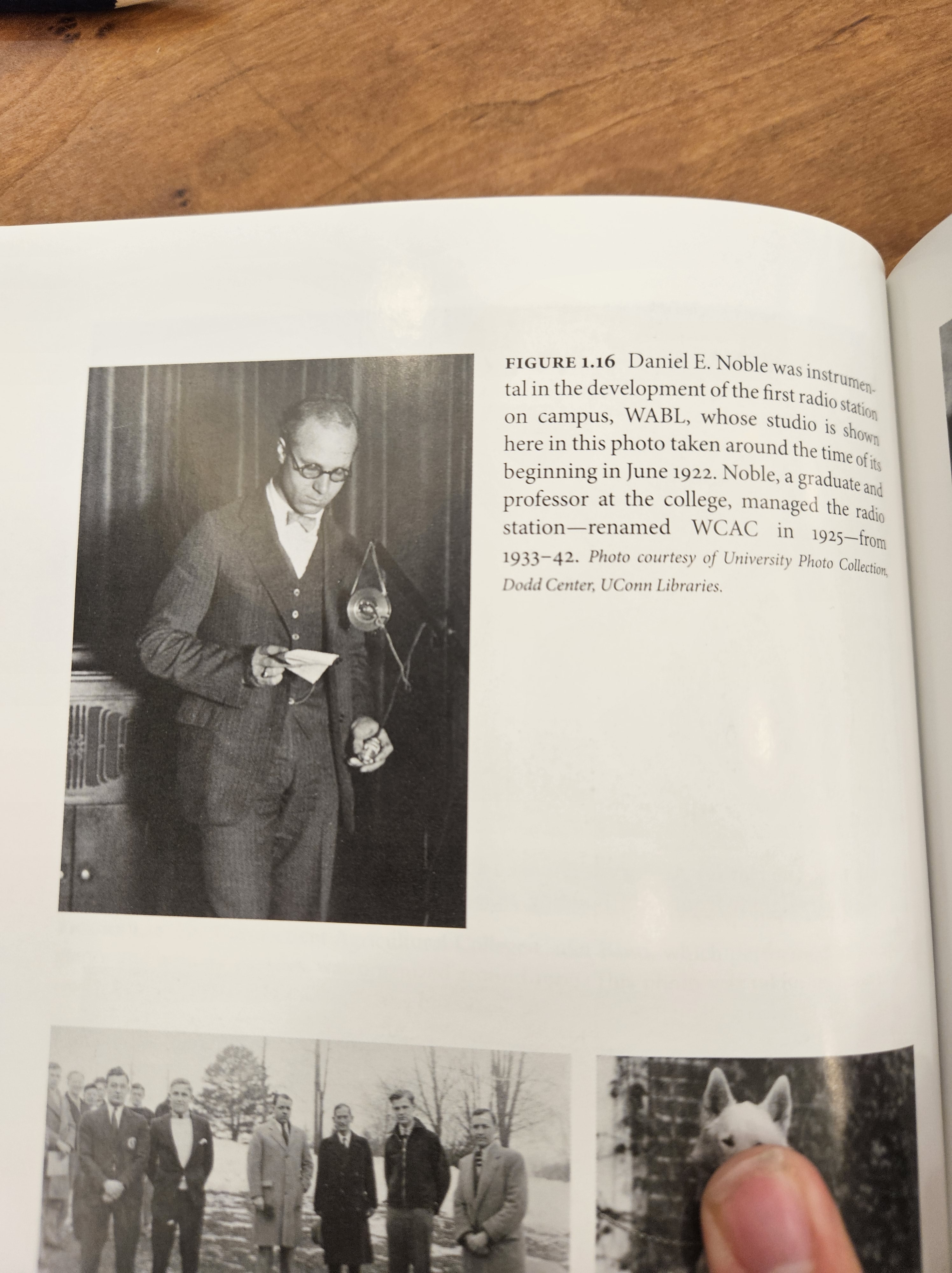
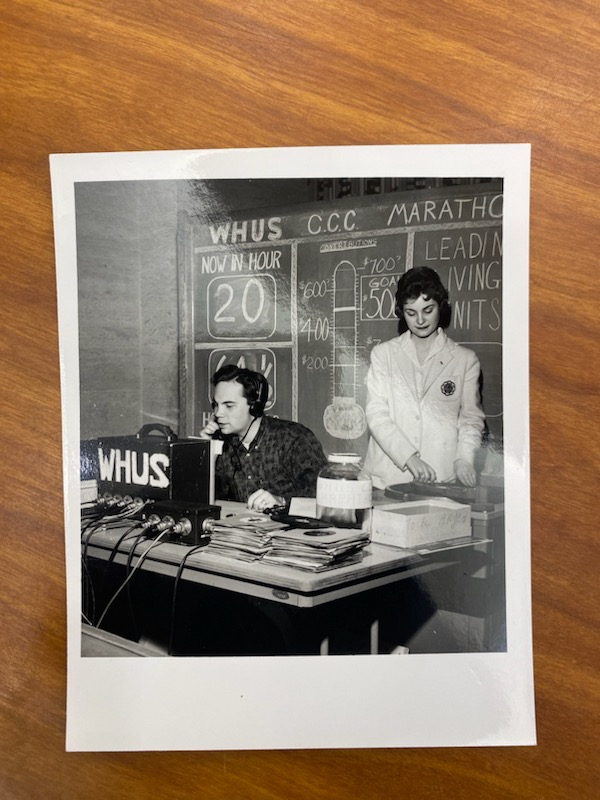
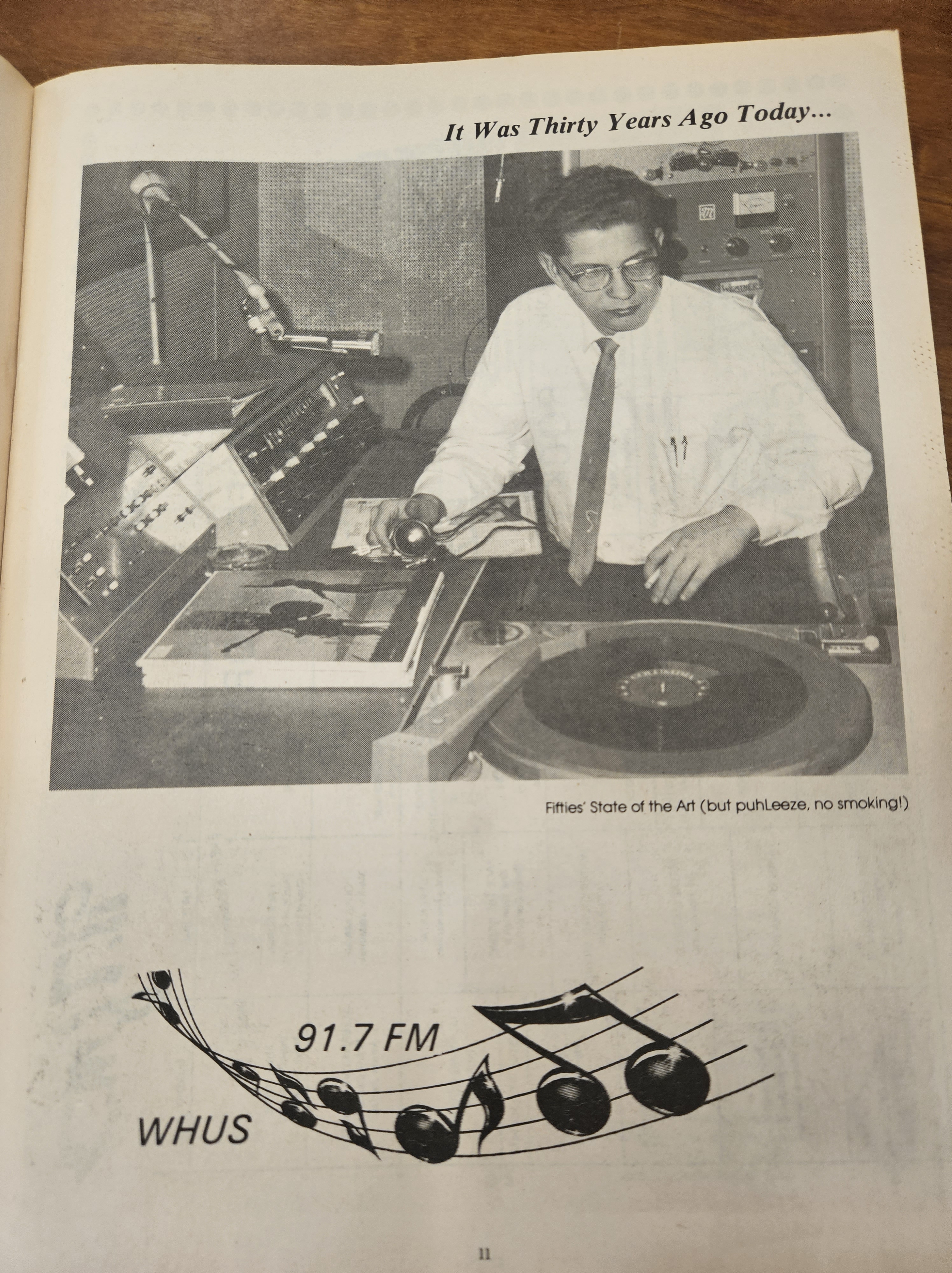
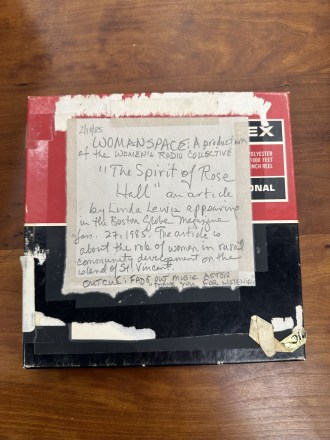
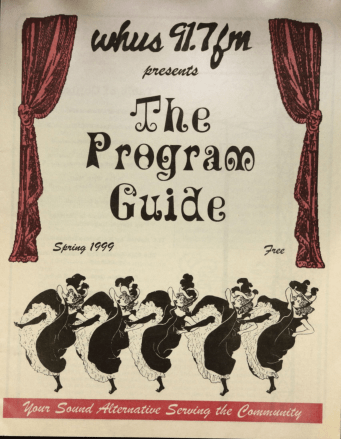
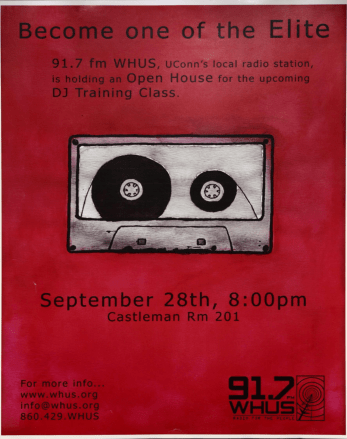
WHUS has 100 years of photos like these from the UConn Archives. I scanned program guides and went to the archives on a semi-daily basis to look through files. These gave me more information about who to contact and what WHUS looked like back then.
The most bountiful resource are audio reels, zines, and program guides. Program guides offer schedules, reports on tech upgrades, interviews with musicians, and DJ op-eds. By looking through the program guides from each year, I figured out what the longest running shows are and who the most consistent staff members were.In the end, I ended up messaging, emailing, and/or calling over 100 former WHUS members about their history at WHUS and their lives after. I “pre-interviewed” DJs (about 10-15) and ended up with over 50 years worth of files, cassettes, and CDs of radio shows and pictures.
WHUS has a lot of different materials in a lot of different mediums. I digitized over 40 cassettes by hand and ripped uncountable numbers of CDs. I also constructed budgets for digitization (outsourced) for one DJ’s collection that featured live WHUS election coverage from 1972. There are modern concert photos and videos taken in RAW and 4k respectively, cassette tapes, professionally recorded radio shows, artist interviews, alternative magazines, punklike concert photos, monotype documents, and more.
Nothing could have been done without the help of the other WHUS staff members. At every turn, I asked for help scanning and digitizing casssettes, as every cassette takes about two hours to digitize.
On the more technical side, the research and organizing took tens, if not hundreds of hours. I would often go to the Connecticut Digital Archive website and search for old records of the Daily Campus (UConn’s school newspaper) to find out more about the staff at WHUS and the financial burdens that early staff had to face. I would ardously click through hundreds of documents and skim thrhough them, searching by word to find what I needed. I used Adobe Acrobat (and other PDF programs) to OCR (optical image recognition) scanned PDFs and identify keywords in articles that I would need to read. For example, I would download every issue of the Daily Campus from the 1950s, but only read the ones with the word “folk” in it. The Wayback Machine was especially useful in allowing me to see 1990s and 2000s snapshots of the WHUS website.
The UConn Archives worked closely with me in terms of organizing materials and WHUS allowed me to collaborate with the Daily Campus and Nutmeg for copyright and licensing agreements. After securing materials of DJs, I made sure to have them sign release forms. I also worked with the UConn Women’s Center and the African American Cultural Center to reach out to their respective communities for possible contacts and stories about WHUS. Lastly, I worked with an independent radio historian (Jennifer from Spinning Indie) to put up some of my (and the archive’s) scans onto the Internet Archive. I also spoke at a radio panel on WHUS’s history and our efforts to celebrate the 100th anniversary.
 Jonathan Kopeliovich